2024年1月2日星期二

Advantages of custom ceramic mugs and customization steps

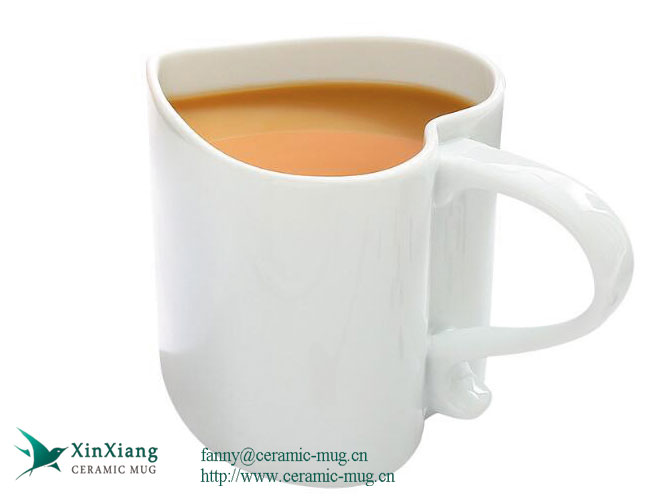
Xinxiang ceramic mug manufacturer Co, A custom ceramic mug is a unique and personalized item that is perfect for a variety of occasions. Whether you want to give a gift to someone special or promote your business, a custom ceramic mug is an excellent choice.


One of the main advantages of a custom ceramic coffee mug is that it can be designed to suit your specific needs. You can choose from a wide range of colors and designs, and even add your own text or logo. This means that you can create a mug that is truly one-of-a-kind, and that reflects your own personal style or brand identity.


Another benefit of a custom ceramic mug is that it is a durable and long-lasting item. Ceramic is a strong and sturdy material that is resistant to scratches and chips, and is also microwave and dishwasher safe. This means that your custom mug will continue to look great and function well for years to come.


Custom promotional ceramic mugs are also a great way to promote your business or organization. You can add your logo or branding to the mug, and give them away as a promotional item or as a gift to your employees or customers. This is a cost-effective way to increase brand awareness and loyalty, and to show your appreciation to those who support your business.


In conclusion, a custom ceramic mug is a versatile and practical item that can be used for a variety of purposes. Whether you want to give a gift or promote your business, a custom ceramic mug is a great choice that is sure to be appreciated by anyone who receives it.


Customizing a ceramic mug is a simple and straightforward process. Here are the steps to follow:


1. Choose the type of ceramic mug you want to customize. There are various shapes and sizes available in the market.


2. Decide on the design you want to put on your ceramic mug. You can choose from a wide range of colors, patterns, and graphics. You can even add your own text or logo.

3. Find a reputable ceramic mug manufacturer that offers customization services. You can do this by searching online or asking for recommendations from friends or colleagues.

4. Once you have found a supplier, provide them with the design you want to put on your mug. They will then create a mockup of the design for your approval.

5. After you have approved the design, the supplier will start the customization process. This typically involves printing the design onto the mug using a special heat transfer process.


6. Finally, the branded ceramic mug is quality-checked before being packaged and shipped to you.


Customizing a ceramic mug is a fun and creative way to add a personal touch to your mug, and it also makes for a great gift mug or promotional item. With the right design and a reputable supplier, you can create a one-of-a-kind ceramic mug that is sure to be appreciated by anyone who receives it.


To add more information, when choosing the type of ceramic mug to customize, consider the purpose of the mug. If it's for everyday use, a standard size and shape may be suitable. However, if it's a gift or promotional item, you may want to choose a more unique shape or size to make it stand out.


When deciding on the design, consider the recipient's interests or the branding of your business. A design that reflects their personality or your brand identity can make the mug more special and memorable.


It's also important to choose a reputable supplier that offers high-quality customization services. Look for reviews and check their portfolio to ensure they have experience with custom ceramic mug manufacturers.


Overall, customizing a ceramic mug is a great way to create a unique and personalized item that can be used for a variety of purposes. With the right design and supplier, you can create a custom mug that is not only functional but also a work of art.

2023年12月24日星期日

Importance of controlling the amount of lead and cadmium dissolved in daily-use ceramics (ceramic coffee mugs)

 Xinxiang Custom Ceramic Mug Manufacturer CO, Lead, cadmium dissolved amount of control work is essential for daily-use ceramics quality management center, is to do a good job of daily-use ceramics product quality and use the key to safety. Through the daily use of ceramic products lead and cadmium dissolved detection, timely detection of lead, cadmium products exceeding the standard, to eliminate the credibility of the enterprise and consumer safety to bring hidden danger, in order to improve the enterprise economy And consumers use the safety of the hidden danger, in order to improve the economic efficiency of enterprises and social credibility. This paper discusses the importance of lead and cadmium dissolution control of daily-use ceramics, especially ceramic coffee mugs, and points out that lead and cadmium dissolution control is a daily-use ceramics quality control and ensure the safety of consumer use. Quality control and ensure the safety of consumers to use the key.


1. Introduction


Human life is inseparable from daily-use ceramics, such as tableware, tea sets, ceramic pots and pans, ceramic coffee mugs, storage jars, etc. Throughout all aspects of human life, so the quality and safety requirements of daily-use ceramics are getting higher and higher, the products should not only be beautiful and durable, but also more importantly, the use process should not affect people's health. Is not only beautiful, durable, more importantly, the use of the process can not affect people's health and safety, which requires daily use of ceramic production process, to strictly control the amount of lead, cadmium dissolved off. As we all know, China is the birthplace of ceramics, after the reform and opening up, the rapid development of this traditional industry, daily ceramics production and export volume according to the world's first. Daily-use ceramics production and exports according to the world's first, but in the quality control, especially lead, cadmium dissolution control compared with developed countries there is still a gap, in order to improve product quality, it is necessary to strictly control the amount of lead, cadmium dissolution.


2. Daily ceramics lead, cadmium dissolved in the amount of origin


2.1 daily ceramics lead, cadmium on the human body harm discovery


In the nineteenth century, a country in Western Europe, a strange disease, patients often have paroxysmal abdominal cramps, neuralgia, anemia, intelligence and the ability to identify the symptoms of decline. Doctors and scientists analyzed the symptoms and found that it was caused by lead poisoning. Because the local people are accustomed to drinking yogurt, and yogurt is Because the local people were used to drinking yogurt, which was often served in earthenware pots containing lead, the lead slowly dissolved into the yogurt, and the people drank it for many years, leading to chronic lead poisoning.


After this incident spread, the health departments of many countries analyzed the surface of ceramics. Through the analysis, it was found that in addition to lead, cadmium is also a harmful element. Cadmium poisoning manifests itself in the form of headaches, chest tightness, coughing, weakness and other symptoms. Therefore, many countries for ceramic products So, many countries for ceramic products, especially ceramic mugs, coffee cups, tea cups, ceramic tableware, sublimation mugs, etc. to make the lead, cadmium dissolved in strict limits.


2.2 The origin of lead and cadmium dissolved in daily-use ceramics


People have found that ceramic decoration containing lead, cadmium high, not necessarily lower than the lead, cadmium-containing contaminated food serious; and the severity of contamination of food, in addition to the decoration of lead, cadmium content, more importantly, is related to the acid corrosion resistance of the food contact surface, acid resistance Strong lead and cadmium is not easy to be dissolved, but also not easy to contaminate food. So people imitate daily life, with commonly used vinegar at a certain temperature to soak ceramic tableware or ceramic coffee mugs, and then test the soaking liquid in the lead and cadmium content. Because the lead and cadmium content of the test is soaked with vinegar Because the lead and cadmium content of the test is leached with vinegar, it is called the amount of lead and cadmium leaching.


3. Control of lead and cadmium dissolved in daily-use ceramics


3.1 Raw material selection of flower paper, pigment and glaze


3.1.1 Reduce the paper, pigment, glaze lead and cadmium content in raw materials. Choose large ceramic factories, quality-assured raw materials. Reduce the area of flower paper.

3.1.2 Improve the acid corrosion resistance of the flower surface, glaze; printed on a layer of glass coating on the flower paper (commonly known as lead, cadmium protective layer), to enhance the acid corrosion resistance of the flower paper.


3.2 Production process control


3.2.1 can be improved by increasing the fineness of the glaze and pigment, so that between the particles become smaller, so that the color layer is flat and thick, after firing can be formed into a relatively tight vitreous, thus improving the

Acid corrosion resistance of flower paper and glaze. Ultimately reduce the amount of lead and cadmium dissolved.

3.2.2 To have a good quality of flower paper, glaze, to avoid the lack of glaze, pores, cracks, scratches and other defects.

3.2.3 To have a reasonable firing system. Including: firing temperature, firing gas, kiln pressure, kiln ventilation and so on.


3.3 Remedial measures for products with excessive lead and cadmium dissolved content


3.3.1 Reduce the amount of lead and cadmium dissolved through secondary firing.

3.3.2 Use chemical methods to reduce lead and cadmium dissolved. Such as using 4% acetic acid to soak the flowers and glaze for 24 hours; or 4% nitric acid to soak the flowers and glaze for 10 hours.


4. Daily ceramics lead, cadmium dissolved detection


4.1 Detection principles


For the contact surface of ceramic products in contact with food and contact with the mouth, with 4% acetic acid solution at a certain temperature, soak (or boil) for a certain period of time, extract the soaking solution, with atomic absorption spectrophotometry for determination.


4.2 Extraction of lead and cadmium from ceramic products


4.2.1 Lead and cadmium extraction of boiled products


Inject distilled water into the steaming products to 2/3 of the capacity, cover the lid, heat to boiling, add acetic acid to a concentration of 4% (v/v), maintain a low boiling for 2 hours, if a reduction in the extract occurs, replenish to the original addition of the scale. After waiting for 2 hours, the extraction solution was cooled to room temperature.


4.2.2 Extraction of lead and cadmium from flat products


4% of the acetic acid extract into the flat products to the mouth edge of 5mm, for the mouth edge of 5mm within the products with decorations injected into the decorative place, covered with borosilicate glass, immersed in the environment at 22 ℃ for 24 hours, but also some countries use room temperature immersion for 22 hours.


4.2.3 Ceramic coffee mugs of lead and cadmium extraction


Ceramic coffee cups supplier, ceramic mugs and other hollow products of lead and cadmium extraction with flat products.


4.2.4 Lead and cadmium extraction on the edge of the products


Take borosilicate glass containers, the diameter of which is 1.25 to 2 times the diameter of the sample under test. The sample to be measured upside down into the container, inject 4% acetic acid solution to the sample to be measured from the mouth of the edge of the 20mm, placed at 22 ℃ for 24 hours, in order to prevent evaporation, plus a lid, such as the loss of extraction solution, then replenish the liquid. If there is a loss of extraction solution, make up the solution.


5. The importance of daily ceramics lead and cadmium dissolution control


5.1 Ensure the safety of consumer use


Ceramics containing lead and cadmium can cause lead and cadmium to leach into food and enter the body if they are used to hold food, especially acidic food. Lead and cadmium are heavy metal elements, easy to enter the human bloodstream and not easy to be eliminated from the body. Long-term consumption of food containing lead and cadmium will have an impact on the human immune system. Long-term consumption of food containing lead and cadmium will have an impact on the body's immune system, leading to the emergence of a variety of diseases. By strengthening the control of lead and cadmium in daily-use ceramics to prevent excessive lead and cadmium dissolved products into the market, we can avoid the hazards of lead and cadmium in daily-use ceramics on the human body.


5.2 Important means to maintain the safety of import and export trade


Daily-use ceramics is China's traditional export commodities, China's daily-use ceramics exports in 2022 was 4,884,500 tons, the main export countries are: the United States, Vietnam, South Korea, Germany, Britain and other countries; the country's requirements for daily-use ceramics lead and cadmium dissolution are becoming more and more stringent, lead and cadmium dissolved products out of the market with excessive lead and cadmium. Dissolved lead and cadmium products out of the country, light will be returned, claims, heavy will be the entire production enterprise reputation, industrial reputation has a bad influence. Therefore, only strict control of daily-use ceramics lead and cadmium dissolved in order to eliminate the outflow of unqualified products, in order to safeguard the Chinese Daily-use ceramics export security.


5.3 Effective means to improve economic efficiency


We all know that the quality and safety of products is the fundamental of long-term development of enterprises. If the quality and safety is not good, it is difficult for enterprises to go the long term. For daily-use ceramics, the improvement of people's living standards, driven by the development and growth of this industry, the expansion of the market scale Expansion of the market size to bring greater competitive pressure, the pressure of competition are concentrated in the quality and safety of products, product prices and service levels. For daily-use ceramics, lead and cadmium dissolved is the most important factor in product quality and safety, any deviation from the safety of lead and cadmium dissolved daily-use ceramics Any factory that deviates from the safety of lead and cadmium dissolved in daily-use ceramics will surely fail in the market competition.


6. Summarize


Daily-use ceramics lead and cadmium dissolved control, is the key to good or bad product quality. Enterprises through the control of raw materials, production control, lead and cadmium detection, strict control of all aspects, so as to control our production of ceramic products of lead and cadmium dissolved. To be in the vast To stand out in the vast competition, we must carry out technological innovation, pay attention to the control of lead and cadmium dissolved, strict quality control, to avoid the inflow of unqualified products into the market, to maintain the safety of China's ceramic products, in order to allow the world to rest assured that the use of our ceramic products.

2023年12月4日星期一

The history of bone china coffee mugs and How to custom

Xinxiang custom ceramic mug manufacturer, The English name of bone china is "BoneChina". It uses animal bone meal (ash) and quartz as raw materials. It needs to be fired twice at high temperature and low temperature glaze firing. The addition of animal bone meal makes this porcelain more rigid and translucent, but the greater the bone content, the more likely it is to burn during the production process, thus creating the rare and precious early bone china. For a long time, this kind of ceramic treasure has been regarded as a noble product, especially the beautiful and unique custom bone china mugs, which reflects the humanistic customs on the porcelain plate painting. It is deeply loved by the British royal family and has been listed as a leader for summit meetings in many countries tableware.

Bone china was first produced in the United Kingdom. According to records, around 1800, the British Thomas Frye accidentally mixed animal ashes in the manufacturing process and dramatically invented bone china. For more than 200 years, bone china has gradually developed into a world ceramic treasure through the hands of generations of master craftsmen.


In China, bone china has a history of nearly half a century. In 1964, Tangshan started the research and development of bone china, which was successful in 1973. Tangshan Bone Porcelain is the first in China, filling the gap in China's high-end porcelain production, and has obtained a national invention patent, opening a new era of China's bone porcelain development.

However, a catastrophe in 1976 destroyed all of this. The "7.28" earthquake destroyed all of Tangshan's ceramic industry. Unfortunately, many participants in the bone china project died, which caused the development of bone china. A heavy blow, some precious texts and pictures have not been restored.

With the support of the state and localities, Bone China was reborn soon after. In the 1980s, the people of Tangshan adopted the plastic extrusion ceramic forming method and successfully trial-produced the new microcomputer-controlled firing technology of the tunnel kiln. After that, two firing techniques were successfully developed. Soon, Bone china began to enter the international market. This kind of bone china independently developed and produced in China has a porcelain quality comparable to that of the British bone china coffee mug.

With the improvement of people’s living standards, bone china, as a world-recognized high-end porcelain species, is increasingly sought after by people. Its market scale is gradually expanding. Shandong, Guangdong, Jiangxi, Shanxi, Sichuan, Fujian and other provinces have begun to produce bone. porcelain. However, Tangshan bone china still ocmugies a major position, accounting for about 80% of China's bone china production. It is Bone china coffee mug factory.

In September 2011, to help improve the quality of Tangshan bone china products, Tangshan Inspection and Quarantine Bureau established the National Ceramic Testing Key Laboratory and became the governing unit and ceramics of the National Ceramic Testing Key Laboratory Alliance (China Huajian Ceramic Testing Alliance) Supporting product team leader unit. The laboratory's daily ceramic testing capabilities cover 42 domestic and foreign standards, and have obtained CNAS and CMA qualifications. Let the laboratory testing experts come to tell you what testing items need to be passed in the experiment to ensure that the bone china is both exquisite and high-quality.

The history of Tangshan bone porcelain coffee mugs is an important part of the history of Chinese bone porcelain mugs.

2023年11月22日星期三

Introduction to bone ceramic coffee cups from around the world

Xinxiang custom ceramic mug manufacturer, 1. The British royal family and the upper-middle class in the United States often use bone china mugs for tea. The moment you met bone china, the aristocratic qualities in her bones were inadvertently revealed.

2. Porcelain originated in China, but bone china was created in the United Kingdom. It was a special porcelain for the British royal family for a long time. Just now, bone china is also a symbol of the identity and status of the owner.
3. A bone china collector once said that one should communicate with bone china through touch, sight and hearing. If you are puzzled, you should hold the bone china in your hand and observe the transparency of the bone china in the light. Feel the fineness and hardness of the china with your hand, and then lightly flick it with your index finger and thumb, you can hear the bone The porcelain "ding" made a crisp sound.

4. The British royal family and the upper-middle class in the United States drink tea and use bone china mugs. They have been favored by the British royal family for more than two hundred years. Queen Elizabeth, Prince Charles, and Princess Diana are all their distinguished guests.
5. The moment you meet bone china, the aristocratic temperament contained in her bones is inadvertently so elegant. Since the enlightenment era in the 18th century, bone china has shined in the royal family of Europe and became the bones on the dining table of the nobility. Bone china has been used by the British royal family for nearly 250 years. Queen Catherine of Russia is also a loyal supporter of bone china. She once owned 952 bone china, from the feast of President Roosevelt’s White House in 1902 to the Queen Mary in 1935. The maiden voyage of a luxury cruise ship, until the coronation ceremony of Queen Elizabeth in 1953, was a feast recorded in the annals of history, bone china tableware always stood proudly in its exquisite posture. Ordinary people who pay attention to the quality of life in Oulu, it is easy to see the elegant hostess brewing flower tea with bone china. The gentle golden borders seem to outline the details of a perfect life. There are many bone chinaware that have been favored by the royal family. When washing bone china mug and watching the light penetrate the soft milky white, you might as well integrate the meticulousness of life into the stunner in your hand, and you will achieve another story that has been passed down for centuries.

2023年11月14日星期二

The history and manufacturing technology of bone china mugs

Xinxiang custom ceramic mug manufacturer, 1.Introduction to China Bone Ceramic mugs Bone porcelain, formerly known as bone powder porcelain, is also known as bone porcelain. Bone porcelain refers to the porcelain clay made by mixing bone powder with quartz, which is lightweight and milky white. When placed under light, the porcelain can be faintly transparent. During the production process, animal bone powder is added to the bone porcelain mugs, and it is internationally recognized that the bone powder content is between 43% - 45%, which is called high-quality bone porcelain mugs (BONE CHINA COFFEE MUG)


Bone meal is made from beef, sheep, pig bones, etc Beef bone is preferred. This component can increase the hardness and transparency of porcelain, and its strength is higher than that of ordinary porcelain, so it can be thinner than ordinary porcelain. The higher the bone content, the easier it is to burn and crack during the production process, so the finished product is more expensive. The bone ceramic mug has a lightweight, dense and hard texture (twice that of daily porcelain), is not easy to wear and tear, has moderate transparency and insulation, and has a natural milky white color unique to natural bone powder.


The materials used for bone ceramic mugs are exquisite, with precise production and strict standards. Its regularity, whiteness, transparency, thermal stability, and other physical and chemical indicators require extremely high requirements. In the late 17th and early 18th centuries, porcelain has always been a patent in China. After the Industrial Revolution, modern Europe gradually developed its own porcelain making technology in the development of Venetian glass craftsmanship. They not only copied Chinese Blue and white porcelain mug and colored porcelain, but also developed many high-quality porcelain varieties.


In the 1980s, China successfully fired the first internationally recognized bone china mugs and exported it in large quantities. Bone china Chinese and Western tableware, with its high quality, style, and taste, has become a must choose porcelain for upgrading major star hotels. Famous catering units such as Beijing Shangri La Hotel, Beijing Hilton Hotel, Beijing Quanjude Hotel, Suzhou Sheraton Hotel, Qingdao Hardman Hotel, Zhongnanhai State Guesthouse, etc. have all adopted bone china products and won the love of consumers. Bone porcelain tea mugs, bone coffee mugs, family set tableware, and bone porcelain handicrafts have become ideal utensils for various companies and middle-class families, and are also the best gifts for relatives and friends. Bone china cups have gradually become the main consumer of high-end porcelain in China.


2.The Manufacturing Process of Bone China Mugs

The production of bone ceramic mugs mainly relies on silicon oxide, alumina, and calcium oxide. The higher the content of calcium oxide, the better the color. In nature, there are not many sources of calcium oxide, so animal bone meal is chosen as the source of calcium oxide. This is also the origin of the name of the bone china mug.


In fact, the so-called bone ceramic is a bone ceramic mug made from the ashes of herbivorous animals (mainly Ca3 (PO4) 2), mixed with high-quality kaolin, quartz and other auxiliary materials, and glazed at 1280 ℃. Generally speaking, adding 25% bone powder to the raw material can be called bone porcelain, but the best quality bone porcelain recognized in the world today is 45% -51% bone powder content, with cow bone being the best.


The production process of bone porcelain mugs includes grouting, molding, dehydration of gypsum molds, initial firing, glaze firing, and sticker baking processes. The bone porcelain cup is fired at high temperature to become a porcelain with high whiteness, high transparency, and delicate porcelain quality. During the firing process of bone porcelain mugs, high requirements are placed on their physical and chemical indicators such as regularity, whiteness, transparency, and thermal stability, resulting in a high scrap rate. Due to the exquisite materials used, precise production, and strict standards, the price of bone porcelain mugs is higher than that of other porcelain varieties.


The unique firing process and the addition of bone carbon eliminate impurities in the porcelain clay, making bone porcelain appear cleaner, more delicate, transparent, lightweight, with few defects, and thinner than ordinary porcelain. It has a special sense of cleanliness visually, and its strength is twice that of ordinary porcelain, which is twice that of daily porcelain. The higher the content of bone powder, the relatively lower the composition of clay, which is more prone to cracking during the production process. This requires higher technology in forming, increasing the difficulty of firing, making bone porcelain mugs more precious.


There are also high-end porcelain such as shell porcelain and pearl porcelain, which are similar to bone porcelain. Due to their high cost and almost no industrial production, bone porcelain mugs are recognized as the most high-end ceramic cups in the world.


3.Black spots in the production process of bone porcelain cups

The partial or complete appearance of black spots on the bone porcelain mug is called "smoking". This defect is due to incomplete oxidation or premature reduction of the body, which causes the carbon organic matter and low-temperature carbon deposits in the body of the bone ceramic mug to not be completely burned, and is sealed by the glaze layer. The surface of the bone ceramic cup is gray.


The factors affecting smoking analyzed by Ceramic Mug Group include:


1).During the oxidation stage of low and medium heat insulation, the oxidation is incomplete and some carbon remains in the body, resulting in a grayish black cross-section of the body. Especially when clay containing a large amount of carbon, such as coal gangue, is used in the body, the carbon in the body should be fully oxidized before the glaze layer melts. For products without carbon in the billet, oxidation should also be strengthened during the medium heat insulation stage, and special attention should be paid to coal fired intermittent kilns and thick tire products. This is because in intermittent kilns, the temperature inside the kiln is low and there is a lot of water vapor during ignition. In addition, the flue gas temperature is low at this time and the chimney suction force is weak. During the short period of time when adding coal and prying the furnace, the flame nature inside the kiln is a reducing atmosphere. At this time, not only can the carbon inside the billet cannot be eliminated, but it also causes carbon deposition on the billet. Especially when the moisture content of the billet entering the kiln is high, it is more likely to cause black spots on the bone porcelain mug. So, during the medium heat insulation stage (usually between 1000~1100 ℃), it is necessary to maintain a strong oxidizing atmosphere and have sufficient insulation time. That is to say, in the kiln operation, the thickness of the ash layer, fire layer, and coal seam on the furnace grate should be controlled to ensure good ventilation, a large excess air coefficient, a clear fire layer in the combustion chamber, and every time the coal is added, it must be burned thoroughly to fully oxidize the billet. Otherwise, if the amount of coal added is too high, the ash layer is too thick, the ventilation under the furnace is poor, and the combustion is not thorough, the flue gas containing free carbon generated in the combustion chamber will be stored in the kiln for a long time. At this stage, the porosity of the green body is the highest, and the adsorption is strong, making it easy to adsorb the flue gas, resulting in carbon deposition.


2). In the later stage of the reduction stage, the reduction atmosphere is too thick, that is, when the glaze has melted, the kiln still maintains a strong reduction atmosphere without timely turning into a weak reduction or neutral atmosphere, and the product is still in the reduction atmosphere. Therefore, CO in the flue gas decomposes at high temperatures, causing surface carbon, especially when using calcium glaze. Due to the severe carbon absorption phenomenon of CaO, the glaze smoke is most likely to form.


3). Analysis of Blackening of Bone Porcelain mug: The glaze formula is unreasonable. If excessive CaO or other fluxes are used, the glaze will prematurely produce liquid phase and melt, the vitrification range is too narrow, making it difficult to burn out the deposited carbon in a timely manner, or the temperature difference in the kiln is too large to ensure the atmosphere change of the china bone coffee mug factories, causing some products to be in a chaotic atmosphere or excessive sulfur in the fuel. If the sulfur containing gas stays in the kiln for too long, the sulfur will strongly seize the oxygen in the flue gas, making the reducing atmosphere thicker, Easy to produce smoke defects.


4.Daily maintenance methods for bone porcelain mugs

After drinking coffee or tea using bone china cups, we need to clean them. Because bone china mugs are thin and have a high whiteness, they are harder to clean than ceramic coffee mugs.


When the surface of the bone porcelain cup is stained with oil, clean it with warm water, and the water temperature should not exceed 80 ℃; If it is difficult to clean, add a small amount of edible vinegar to water and then clean.


If the outer wall of the bone porcelain cup is scratched, it can be gently polished with toothpaste; When using a damp cloth or hand to clean, attention should be paid to the force, not too much, to avoid scratching the porcelain.


After use, bone china mugs often leave coffee or tea stains. To clean them, add vinegar or lemon juice to warm water and slowly clean them manually.

2023年11月8日星期三

Shandong Ceramic Industry Status and Development Plan

Xinxiang custom ceramic mug manufacturer, shandong Province is located in eastern China and the lower reaches of the Yellow River. It is one of the major coastal provinces and cities in my country. The total land area is 156,700 square kilometers, accounting for about 1.6% of the country's total area, ranking 19th in the country. The total population of Shandong in 2008 reached 94.175 million.


Shandong is a famous large-scale Shandong ceramic production area in China, and Zibo and Linyi are the concentrated representatives of Shandong ceramics. Zibo is located at the intersection of the Luzhong Mountains and the Lubei Plain in the middle of Shandong. It has unique geographical advantages. It is connected to Mount Tai in the south, the Yellow River in the north, the coastal tourist cities of Qingdao, Yantai and Weihai in the east, and the spring city of Jinan in the west. Zibo is a cluster city, governing five districts: Zhangdian, Boshan, Zichuan, Zhoucun, Linzi and three counties of Huantai, Yiyuan, and Gaoqing. The Jiqing Expressway runs from east to west in the city.


Zibo is an important industrial and tourist city in Shandong Province, with a total area of 6000 square kilometers and a population of 4 million. Linyi City is located in the southeast of Shandong Province, bordering the Yellow Sea and the north of Jiangsu in the south. Now it has jurisdiction over 9 counties and 3 districts, 180 towns, sub-districts, 7151 administrative villages (residents), 10.36 million people, with a total area of 17,200 square kilometers. Plains, mountainous areas, and hills each account for one-third of the population. The largest city in area.

Linyi has many types of mineral resources. There are 82 kinds of minerals with discovered and proven reserves. Among them, the reserves of diamonds rank second in the country, and the reserves of quartz sandstone, ceramic soil, dolomite and granite rank first in the province. Now Linyi is the second largest ceramic producing area in Shandong. The development of Shandong ceramics industry has unique advantages in raw material resources. It has been proved that the reserves of local limestone resources in Shandong reach 1 billion tons, of which the reserves of the three larger limestone mines are all over 300 million tons. Quartz sandstone, Shandong ceramic clay, ceramic clay and other production ingredients all have large reserves, and individual raw materials are the only producing areas in Shandong Province.

Zibo City is also an important coal producing area in Shandong Province, with an annual output of 10 million tons of coal. In addition, natural gas pipelines have been transported to the main industrial production areas of Shandong ceramics. It has laid a solid foundation for the rapid development of the ceramic industry.

A large number of private enterprises represented by Zibo Taishan Porcelain Industry, Huayang, Guohua, Shuangfeng, Shandong Futai, Hongda, Zhongqiang, and Xinxiang Ceramics have sprung up. After the founding of New China, Shandong Ceramics recovered and developed rapidly. The production technology is continuously improved, and the degree of mechanization of each production process is continuously improved. In the past, Zibo had a Boshan Ceramic Factory organized by more than 100 private kiln factories, with 5,000 employees and selling products in more than 30 countries. A relatively complete ceramic industry foundation has been initially formed.

2023年11月1日星期三

Production of customized ceramic cups - 6 methods

Xinxiang Custom Ceramic Mug Manufacturer, The history of making porcelain in my country can be traced back to more than 3000 years ago. Although there are many differences between pottery and porcelain mugs, the two are organically linked. Porcelain-making technology was invented on the basis of the continuous development of ceramic-making technology. Although porcelain is made of porcelain clay, the surface is covered with vitreous glaze, and it is baked at a high temperature above 1000 ℃. But as a porcelain carcass, the molding method is basically the same as that of Tao ware, from the earliest manual kneading method and clay stick disc construction method to the mud piece encircling method, wheel molding method, impression method, and grouting method. Wait.


1. Hand Kneading Method

Use your hands to create the clay as you like, pinch out some smaller objects, this is the most primitive and simplest forming method.

2. Clay stick plate construction method

Rub the soil into mud sticks, build the mud stick discs from the bottom to the mouth of the vessel from the bottom to the mouth, then glue the whole vessel with mud, and finally smooth out the mud cracks left by the wall of the vessel. This method appeared in the middle of the Neolithic Age.

3. Mud Piece Enclosing Method

The raw mud blocks are first processed into mud pieces, and then the mud pieces are enclosed and combined into the required shape.

4. Wheel forming method

A method in which mud is placed on the wheel and formed by the centrifugal force generated by the rotation of the wheel. It is mainly used for the production of round objects, and the wheels are divided into slow wheels and fast wheels.

5. Impression method

The method of inserting the mud into a special mold. Mainly used to make ceramic figurines, animal and utensil parts, patterns, etc.

6. Grouting method

A method of pouring mud into a mold such as plaster, and using the capillary action of the plaster model to adsorb the suspended slurry on the inner wall of the mold to form.

At present, China Ceramic Factories uses three kinds of molding processes: rolling, plastic pressing, and grouting. Both rolling and plastic pressing belong to the impression method. These three types of molding methods are enough to control the changes in the shape of Tao Run's thousands of products.

Rolling is used in the production of circular, symmetrical, and embossed products on the outer surface.

Square products, flat discs and internal surface relief products generally use plastic pressing. Plastic pressing is usually operated by two people at the same time. The whole process includes cutting mud, putting mud, air flushing, tearing, connecting blank, wiping, trimming, and putting on the shelf. . And regularly drain the mold.

The handle of the mug and most special-shaped products require a grouting process. Grouting is more cumbersome and more expensive than rolling and plastic pressing. But at the same time, the value of special-shaped products is usually higher. Grouting includes the steps of grouting, pouring, turning over the mold, ejecting the mold, and finishing the mold.